
Table of Contents
Introduction
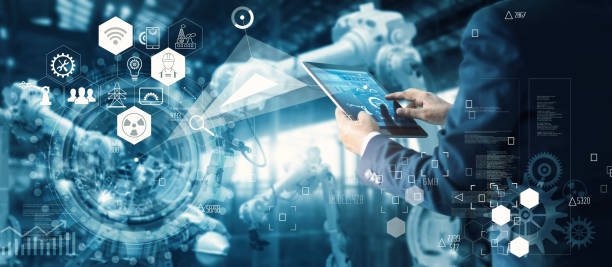
AI in Industry 4.0 is revolutionizing the global manufacturing sector by combining artificial intelligence with advanced technologies such as robotics, IoT, and cloud computing. Industry 4.0 represents the fourth industrial revolution, where smart factories use connected systems and intelligent machines to optimize production processes. With AI-driven analytics and automation, companies can improve efficiency, reduce operational costs, and enhance product quality.
AI in Industry 4.0 enables machines to analyze data, predict maintenance needs, and make real-time decisions without human intervention. Modern industries are increasingly adopting AI-powered systems to create smarter manufacturing environments. These intelligent systems can monitor production lines, detect anomalies, and automatically adjust processes to maintain optimal performance. According to global technology research, AI-driven manufacturing is expected to dramatically increase productivity across industries.
[Latest Technology Trends 2026]
What Is Industry 4.0?
Industry 4.0 refers to the integration of advanced digital technologies into industrial operations. It connects machines, devices, sensors, and software to create intelligent systems capable of autonomous decision-making. Unlike traditional manufacturing systems, Industry 4.0 focuses on automation, real-time data analysis, and interconnected devices.
Artificial intelligence plays a central role in this transformation. AI algorithms process vast amounts of data collected from sensors, machines, and supply chains. This allows companies to optimize workflows, improve decision-making, and enhance productivity.
Global organizations studying digital transformation highlight the growing importance of AI-powered manufacturing systems (World Economic Forum – Industry 4.0).
Key Technologies Driving AI in Industry 4.0
Several technologies work together to enable AI-powered industrial systems.
1. Industrial Internet of Things (IIoT)
The Industrial Internet of Things connects machines, sensors, and production equipment to digital networks. These connected devices generate real-time data that AI systems analyze to improve operations.
Smart sensors monitor temperature, pressure, energy consumption, and machine performance. AI algorithms then use this data to optimize processes and detect potential issues.
2. Machine Learning
Machine learning algorithms allow industrial systems to learn from data and improve performance over time. In manufacturing, machine learning can detect patterns that humans might miss.
For example, AI systems can analyze production data to identify inefficiencies or predict equipment failures before they occur.
3. Robotics and Automation
AI-powered robots are transforming manufacturing by performing repetitive tasks with high precision. Collaborative robots, also known as cobots, work alongside human workers to increase productivity and safety.
4. Cloud Computing
Cloud computing enables industries to store and process large volumes of data generated by connected machines. AI systems use this data to provide insights that help companies improve production processes.
Research institutions studying industrial innovation emphasize the role of cloud-based AI platforms in modern manufacturing (McKinsey – Smart Manufacturing).
Benefits of AI in Industry 4.0
1. Predictive Maintenance
Predictive maintenance is one of the most significant benefits of AI in Industry 4.0. Traditional maintenance strategies rely on fixed schedules, which can lead to unnecessary downtime or unexpected failures.
AI systems analyze machine data to predict when equipment is likely to fail. This allows companies to perform maintenance only when necessary, reducing downtime and maintenance costs.
[Latest Technology Trends 2026]
2. Improved Operational Efficiency
AI helps manufacturers optimize production processes by analyzing operational data in real time. Intelligent systems can automatically adjust machine settings, optimize workflows, and reduce energy consumption.
This leads to increased productivity and improved operational efficiency.
3. Enhanced Quality Control
Quality control is essential in manufacturing. AI-powered computer vision systems can inspect products at high speed and detect defects that human inspectors might miss.
These systems analyze images from cameras installed on production lines to ensure that products meet quality standards.
4. Supply Chain Optimization
AI improves supply chain management by predicting demand, optimizing inventory levels, and identifying potential disruptions.
By analyzing data from suppliers, logistics networks, and market trends, AI systems can help companies make better supply chain decisions.
Real-World Applications of AI in Industry 4.0
Smart Factories
Smart factories use AI-powered systems to automate production processes. Machines communicate with each other and adjust operations automatically based on real-time data.
This allows factories to operate more efficiently and respond quickly to changing market demands.
Autonomous Production Lines
AI enables autonomous production lines where machines operate with minimal human intervention. These systems continuously monitor performance and adjust processes to maintain efficiency.
Energy Management
Industrial facilities consume large amounts of energy. AI systems analyze energy usage patterns and recommend strategies to reduce energy consumption.
This helps companies lower costs while also reducing environmental impact.
Challenges of AI in Industry 4.0
Despite its many benefits, implementing AI in Industry 4.0 comes with several challenges.
High Implementation Costs
Deploying AI technologies requires significant investment in infrastructure, software, and skilled personnel.
Data Security and Privacy
Industrial systems generate large volumes of sensitive data. Protecting this data from cyber threats is essential.
Workforce Transformation
AI-driven automation may change the nature of industrial jobs. Workers must develop new skills to work alongside intelligent machines.
Technology experts emphasize the importance of reskilling workers to adapt to the evolving industrial landscape (World Economic Forum – Future of Work).
Future of AI in Industry 4.0
The future of AI in Industry 4.0 looks promising as technological advancements continue to accelerate. Emerging technologies such as edge computing, advanced robotics, and digital twins will further enhance industrial automation.
Digital twins create virtual replicas of physical systems, allowing companies to simulate operations and optimize processes before implementing changes in the real world.
AI-driven predictive analytics will also play a critical role in improving manufacturing efficiency and reducing operational risks.
[Latest Technology Trends 2026]
Conclusion
AI in Industry 4.0 is transforming manufacturing by enabling intelligent automation, predictive maintenance, and real-time decision-making. As industries adopt advanced technologies such as AI, IoT, and robotics, manufacturing processes become more efficient, flexible, and sustainable.
Organizations that invest in AI-powered industrial systems will gain a competitive advantage in the rapidly evolving global economy. By leveraging intelligent technologies, companies can build smarter factories, optimize supply chains, and deliver higher-quality products.
[Latest Technology Trends 2026]
FAQ: AI in Industry 4.0
What is AI in Industry 4.0?
AI in Industry 4.0 refers to the use of artificial intelligence technologies to automate industrial processes, analyze data, and improve manufacturing efficiency.
How does AI improve manufacturing?
AI improves manufacturing through predictive maintenance, quality control, and process optimization.
What technologies support Industry 4.0?
Industry 4.0 technologies include artificial intelligence, robotics, IoT, cloud computing, and big data analytics.
Can AI replace human workers in factories?
AI does not completely replace workers but supports them by automating repetitive tasks and improving productivity.
What is the future of AI in Industry 4.0?
The future includes smart factories, autonomous production systems, and advanced predictive analytics.